
Signs of Rodents in Your Home
Updated 2026-11-24 · St. Louis Rodent Control
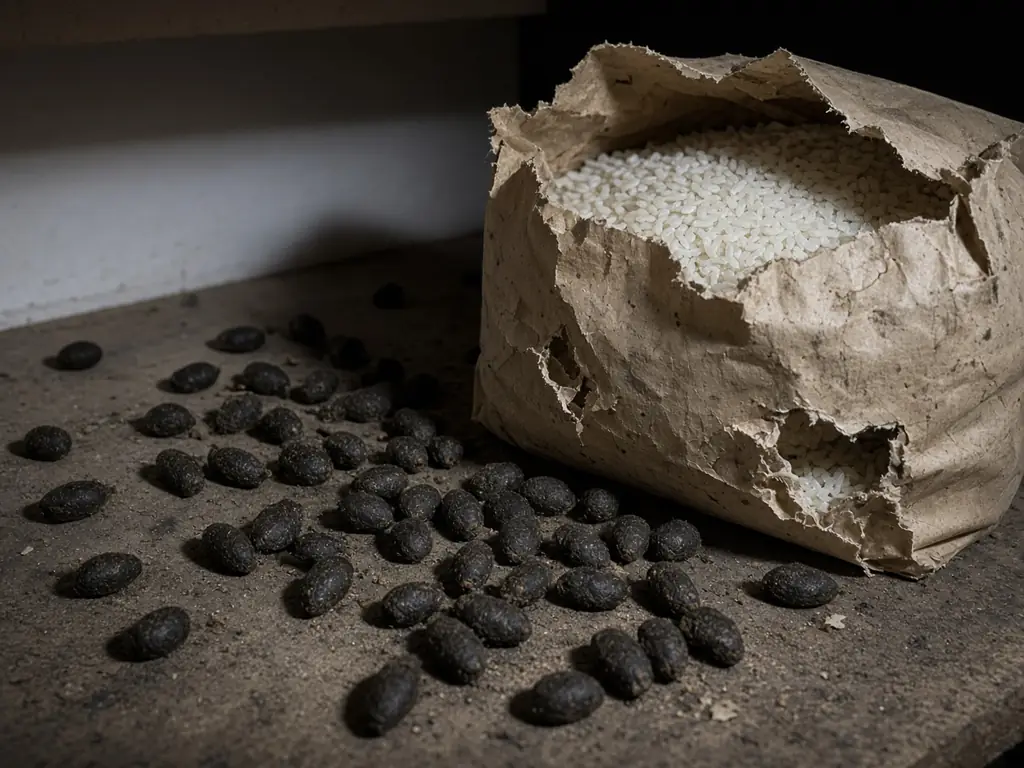
Rodents are good at staying out of sight, so most St. Louis homeowners find the evidence before they see the animal. The sooner you recognize the signs, the smaller and cheaper the job.
1. Droppings
Droppings are the most reliable sign. Mouse droppings are about 1/8 to 1/4 inch long, dark and pointed at the ends, a bit like dark grains of rice. They turn up in kitchen drawers, under the sink, behind the stove and refrigerator, and along basement walls. Norway rat droppings are much larger, about 1/2 to 3/4 inch, with blunt ends, and are usually found in garages, basements, crawlspaces and along exterior walls.
Fresh droppings are dark and soft; old ones are gray and crumble. If you clean an area and new droppings appear within a day or two, the activity is current.
2. Sounds at night
Light scratching or skittering inside walls and ceilings after dark usually means mice. Heavier thumping, gnawing or movement under floors points to rats. Noise in the attic early in the morning and at dusk, with heavier movement, is often squirrels rather than mice.
3. Gnaw marks and damage
Rodent teeth never stop growing, so they chew constantly: food packaging, cardboard, baseboards, plastic trash carts, door corners and, most dangerously, electrical wiring. Small, neat chew marks point to mice; rougher, larger gnawing to rats.
4. Rub marks, runways and tracks
Rodents follow the same routes along walls. Over time their fur leaves dark, greasy smudges along baseboards, joists and around holes. In dusty basements and garages you may see tiny footprints and tail drag marks.
5. Nests and smells
Mice build nests from shredded paper, fabric and insulation, often in storage boxes, drawers, behind appliances and in wall voids. An established infestation has a stale, musky smell, strongest in closed cupboards. A sharp, sweet, rotting smell usually means a rodent has died in a wall or ceiling.
6. Burrows outside
Norway rats dig burrows about 2 to 4 inches across along foundations, fences, sheds, retaining walls and under decks, often with smooth, packed runways leading to them. Burrows near compost bins, bird feeders and trash carts are common in St. Louis yards and alleys.
7. Pets acting strangely
Cats and dogs often notice rodents first. A pet staring at one section of wall, scratching at the base of a cabinet or sniffing behind the refrigerator is worth taking seriously.
What to do when you find signs
- Do not sweep or vacuum dry droppings. Spray them with a disinfectant or a bleach solution (1 part bleach to 10 parts water), let it soak for five minutes, then wipe up with paper towels while wearing gloves.
- Note where you find things. Droppings, chew marks and noises tell an inspector where rodents travel and how they are getting in.
- Remove easy food. Move pantry items, pet food and birdseed into sealed containers.
- Get an inspection if you find signs in more than one room, see rats, or the signs come back after you trap a mouse or two.
Monitoring after treatment
After rodent control, keep an eye on the same spots. Clean the old droppings so new ones stand out, check traps or monitoring stations on the schedule your technician gives you, and listen for noises at night. No new droppings and no catches for two to three weeks is a good sign the problem is solved. New activity usually means another entry point needs sealing.
Get a free rodent inspection
Tell us what you are seeing and where. We will book a free inspection with a licensed local technician.
Call (314) 735-5967